

Skin · 30 May 2025 · 7 min read
Does your face go red after dermaplaning? Causes and how to calm it
By Alaiyka Parvez
Owner, CoLaz Aesthetics Clinic
The short version
- • A red or flushed face after dermaplaning is common and usually harmless: it is the skin reacting to being freshly exfoliated, with more blood flow to the treated area.
- • For most people the redness settles within a few hours, and often within one to twenty-four hours depending on how sensitive your skin is.
- • Calm it with a cool compress, a fragrance-free moisturiser and daily broad-spectrum SPF, and skip acids, retinoids, heat and makeup for a day or two.
- • People with rosacea, thin or sensitive skin, or broken capillaries tend to go redder and stay red a little longer.
- • See your clinician if redness lasts beyond 48 hours or comes with swelling, burning, blistering or breakouts, because that is not part of normal healing.
TL;DR
- A red or flushed face after dermaplaning is common and usually harmless: it is the skin reacting to being freshly exfoliated, with more blood flow to the treated area.
- For most people the redness settles within a few hours, and often within one to twenty-four hours depending on how sensitive your skin is.
- Calm it with a cool compress, a fragrance-free moisturiser and daily broad-spectrum SPF, and skip acids, retinoids, heat and makeup for a day or two.
- People with rosacea, thin or sensitive skin, or broken capillaries tend to go redder and stay red a little longer.
- See your clinician if redness lasts beyond 48 hours or comes with swelling, burning, blistering or breakouts, because that is not part of normal healing.
Yes, it is normal for your face to go a little red after dermaplaning, and for most people that flush is mild and gone within a few hours. The redness is your skin responding to a surface exfoliation: the treatment lifts away dead cells and fine hair, blood flow to the area rises, and the fresh surface underneath is briefly more reactive.
Below is the plain explanation we give dermaplaning patients across our seven UK clinics: why the redness happens, how long it lasts, how to calm it, what makes it worse, and the point where it is worth a phone call rather than a wait.
Why does your face go red after dermaplaning?
Your face goes red after dermaplaning because the treatment gently exfoliates the top layer of skin, which increases blood flow to the surface and briefly exposes newer, more sensitive skin underneath.
Dermaplaning uses a sterile blade held at an angle to scrape away the outermost layer of dead skin cells (the stratum corneum) along with soft vellus hair. Research describes the stratum corneum as the skin’s main barrier, the part that holds moisture in and keeps irritants out. When a thin amount of that layer is buffed away, the body responds the way it does to most exfoliation: circulation to the area rises to support the fresh surface, and that extra blood flow is what you see as pinkness or a flush.
There are usually three overlapping reasons for the colour change:
- Increased blood flow. The light friction of the blade prompts more circulation to the treated area, so the skin looks warmer and pinker for a while.
- Mild surface inflammation. Exfoliation is a small controlled stress, and a short-lived pink tone is part of the normal response.
- A more exposed new surface. The fresher skin underneath reacts a little more to air, temperature and products until the barrier settles.
None of this means something has gone wrong. A systematic review of dermaplaning and other non-invasive resurfacing methods notes that the benefit is immediate but the effect is temporary, which fits what most patients feel: a quick glow first, then a normal, brief flush as the skin recovers.
Is redness after dermaplaning normal or a warning sign?
Mild redness after dermaplaning is normal and expected, not a sign of damage. It becomes a warning sign only when it is severe, lasts well beyond a day, or comes with swelling, stinging or blistering.
In the hours after a session, most people notice one or more of the following, all of which settle quickly:
- Light pinkness or a flush, similar to the colour after a brisk walk.
- A warm, slightly tight feeling across the treated area.
- Skin that looks smoother but reacts a little more to your usual products.
Dermaplaning is a surface treatment that does not break the skin, which is part of why it has almost no downtime. The general NHS guidance on cosmetic procedures is to follow the aftercare your clinician gives you closely, especially in the first week, and that is what keeps a normal flush brief rather than letting it tip into irritation. Redness that is deepening, spreading or painful, rather than fading, is the version worth checking.
How long does redness last after dermaplaning?
For most people the redness after dermaplaning fades within a few hours, and typically settles somewhere between one and twenty-four hours after the session. How long it lingers depends mainly on your skin type and how much pressure was used.
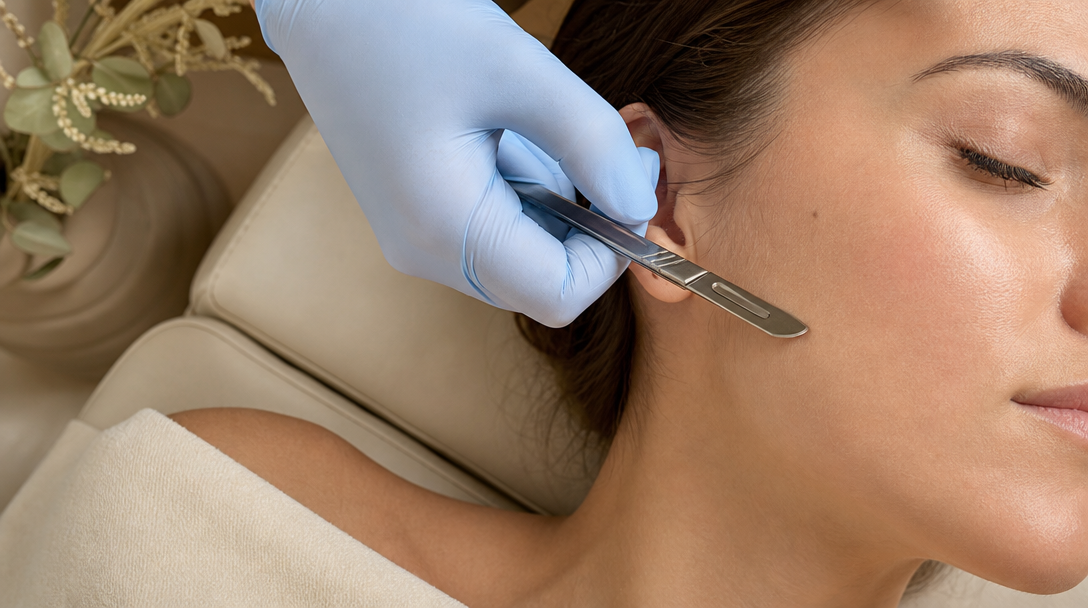
Here is the timeline we describe to patients:
- First few hours. A light flush and warmth as blood flow to the treated area rises. This is the most common phase and it eases on its own.
- Same day to next morning. For most skin types the pinkness has faded by the time you wake up, especially with a simple calming routine.
- Beyond 24 to 48 hours. Redness that is still obvious, or getting worse, is no longer part of the ordinary response and is worth a quick check with your clinician.
Three things tend to lengthen the redness: naturally sensitive or reactive skin, firmer pressure during the treatment, and stacking strong actives or heat straight afterwards. Calming products shorten it. If the colour is still there after a couple of days, treat that as a reason to ask rather than a reason to worry alone.
What makes some people go redder than others?
Some people go redder after dermaplaning because of how reactive their skin is, how it was treated on the day, and what they do in the hours afterwards. The main factors are skin sensitivity, pressure, and aftercare.
The usual causes of more redness than average are:
- Sensitive or thin skin. A thinner barrier flushes more easily and takes a little longer to calm.
- Rosacea or visible capillaries. Skin that already flushes readily will show more colour after any exfoliation. The NHS notes that rosacea-prone skin reacts to triggers such as heat, exercise and skincare, so dermaplaning can prompt a stronger flush.
- Heavier pressure or repeated passes. More friction means more blood flow and more visible redness.
- Active ingredients used too soon. Acids, retinoids and strong vitamin C on freshly exfoliated skin can sting and redden it further.
- Heat straight afterwards. A hot shower, sauna, gym session or sun exposure widens surface vessels and deepens the flush.
Knowing which of these applies to you helps set expectations and, more importantly, tells you what to avoid for the first day or two.
How can you calm a red face after dermaplaning?
The fastest way to calm a red face after dermaplaning is to cool the skin, keep it hydrated and protected, and leave strong actives alone for a few days. Gentle beats busy here.
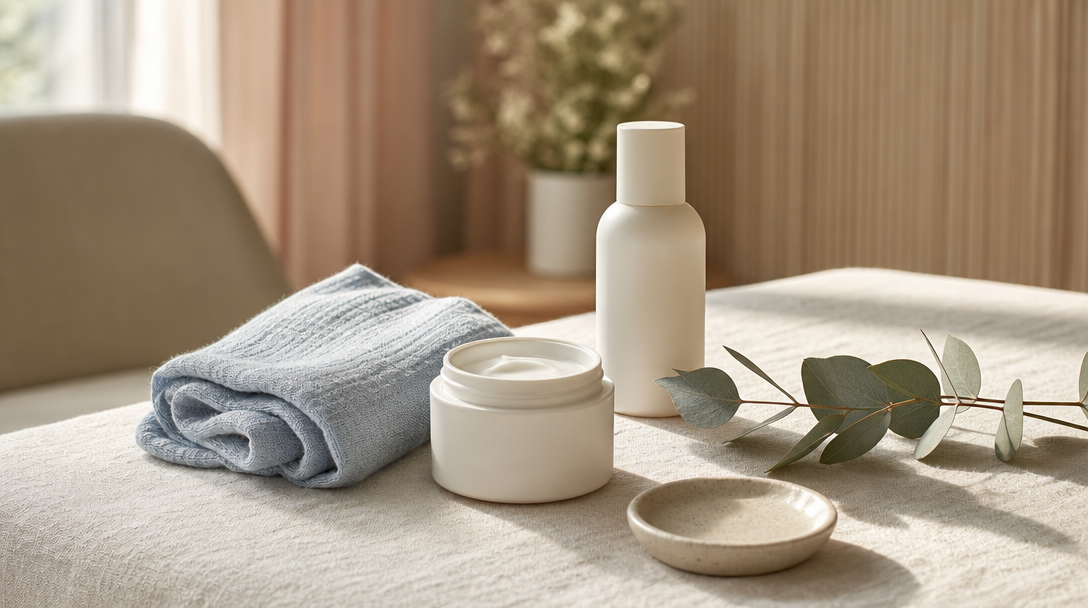
What helps in the first 24 to 48 hours:
- A cool compress. A clean, cool (not ice-cold) cloth held gently over the area eases warmth and redness soon after the session.
- A fragrance-free moisturiser. A simple ceramide or hyaluronic acid cream supports the barrier and settles any tightness. Ingredients such as Centella asiatica and panthenol are studied for calming reactive skin, and one sensitive-skin study found redness, tightness and itching all reduced with a Centella-and-ceramide formula.
- Daily broad-spectrum SPF. Freshly exfoliated skin is more exposed to UV, so protection matters. NHS sun safety guidance recommends at least SPF 30 with a high UVA rating, reapplied when you are outdoors.
- A calm, cool approach. Skip saunas, hot showers and hard workouts for a day, and let the skin rest.
What to skip for three to five days:
- Retinoids, glycolic, lactic and salicylic acids, and high-strength vitamin C.
- Physical scrubs, exfoliating cloths and face brushes.
- Makeup for at least the first day, to let the surface settle.
The reasoning is simple: your skin has just had a mechanical exfoliation, so adding a chemical one on top only doubles the irritation. Dermatologists at the American Academy make the same point about over-exfoliating, noting it can leave skin red and irritated, and that darker skin tones in particular should avoid aggressive exfoliation because it can trigger dark spots. If your skin is prone to persistent flushing, our guide to redness and rosacea covers gentler options too.
What should you avoid to prevent extra redness?
To stop a normal flush turning into lasting redness, avoid heat, strong actives, sun and friction in the first day or two after dermaplaning. Poor aftercare is the most common reason redness sticks around.
In the first 24 to 48 hours, steer clear of:
- Saunas, steam rooms, hot showers and anything that makes you sweat heavily.
- Alcohol-based toners, astringents and strong fragrances.
- Direct sun and sunbeds, which both irritate fresh skin and raise the risk of pigment changes.
- Retinols, exfoliating acids and grainy scrubs.
Gentle care during this window is what keeps sensitivity from turning into irritation. The point is not to fuss over the skin but to leave it mostly alone while the barrier restores. More on the full routine is in our dermaplaning aftercare guide.
Who is more likely to experience redness after dermaplaning?
Not everyone reacts the same way, and some people are simply more prone to going red. The strongest predictor is how reactive your skin already is day to day.
You are more likely to flush, and to stay red a little longer, if you have:
- Rosacea, easy blushing or visible broken capillaries.
- Thin, dry or sensitive skin.
- Little experience with exfoliating treatments, or you are using strong skincare actives at home.
If any of these describe you, that is worth raising at the consultation. A good clinician will adjust pressure, patch-test where sensible, and sometimes suggest a calmer alternative. For very reactive skin, a soothing option such as LED light therapy may suit better between facials, since it works without abrading the surface.
When should redness after dermaplaning worry you?
Mild, fading redness is normal, but a few signs mean the reaction has gone beyond ordinary healing and should be checked. The rule of thumb is that redness should be easing by the day after, not building.
Contact your clinic if you notice:
- Redness or swelling lasting beyond 48 hours, which can point to irritation or a reaction to a product used on the day.
- Burning or increasing pain rather than a settling warmth. A short-lived tingle is fine; sustained burning is not.
- Blistering, scabbing or peeling, which are not expected after a surface exfoliation.
- New bumps, breakouts or any sign of infection, such as heat, spreading redness or yellow discharge.
A quick check is always better than three days of guessing at home. Most of the time it is nothing, and a five-minute look under a treatment lamp will confirm that. Over-treating an irritated area yourself usually makes it worse.
How CoLaz keeps dermaplaning comfortable
At CoLaz, every dermaplaning session starts with a free consultation and ends with clear aftercare, so a normal flush never turns into a worry. We would rather over-explain the first day than leave you guessing.
That means a single-use sterile blade every time, pressure matched to your skin, a check that you are a good candidate (we reschedule for active acne, cold sores, rosacea flare-ups or recent sunburn), and written aftercare covering exactly what to use and what to avoid.
We hold to the same standard the NHS recommends for cosmetic procedures: a qualified practitioner on a Professional Standards Authority-accredited register such as the JCCP or Save Face, with proper training and insurance. If you are new to dermaplaning, or your skin flushes easily, the free consultation is the place to talk it through and get the plan in writing.
Ready to begin
Book a free Dermaplaning consultation at your nearest CoLaz clinic.
Thirty minutes with a qualified clinician. Skin assessment, candid recommendation, no obligation. Read about Dermaplaning at CoLaz, from £65 (full face, single session).
WhatsApp replies in minutes during opening hours
About the author
Alaiyka Parvez
Owner, CoLaz Aesthetics Clinic
Alaiyka Parvez bought the CoLaz franchise network in 2023, having joined the company as a Slough clinic employee in 2013 and gone on to open the Hounslow and Wembley franchises. She writes here on the treatments CoLaz delivers across its seven UK clinics.
Read more about Alaiyka and CoLaz →More on Skin
Keep reading.

15 September 2026 · 8 min
Salmon DNA polynucleotides: what they are and why aesthetics is hooked
Purified fragments of salmon DNA, known as polynucleotides or PDRN, are one of the fastest-growing skin boosters in UK clinics. Here is what the research says about how they work and what to realistically expect.

11 August 2026 · 10 min
HIFU treatment results: month by month, what is realistic
HIFU tightens skin gradually rather than instantly. Here is the honest month-by-month results timeline, how long the effect lasts, and who is a good candidate.
28 July 2026 · 10 min
Types of chemical peels: glycolic, salicylic, TCA and Jessner explained
Glycolic for dull and sun-damaged skin, salicylic for oily and acne-prone, lactic for sensitive, mandelic for pigmentation in deeper skin tones, TCA for resurfacing with downtime. A clear decision guide to the main types of chemical peels.
Begin
Book a free consultation
at your nearest CoLaz clinic.
Thirty minutes with a qualified clinician. Skin assessment, candid recommendation, written plan. No obligation.