Skin · 25 August 2025 · 7 min read
IPL Skin Rejuvenation Recovery Time: What to Expect Day by Day
By Alayika Parvez
Owner, CoLaz Aesthetics Clinic
The short version
- • IPL skin rejuvenation has little to no downtime, so most people return to normal life the same day.
- • Expect mild redness and warmth for a few hours to three days, then darkened pigment spots that flake away over one to two weeks.
- • Clearer, more even-toned skin usually shows around day seven to ten, with results continuing to refine over about four weeks.
- • Daily SPF, gentle skincare and no picking are the three things that most affect how well your skin heals.
- • At CoLaz, every IPL course is planned at a free consultation with written aftercare, not sold as a one-off on the day.
TL;DR
- IPL skin rejuvenation has little to no downtime, so most people go back to normal life the same day.
- Expect mild redness and warmth for a few hours to three days, then darkened pigment spots that flake away over the first one to two weeks.
- Clearer, more even-toned skin usually shows around day seven to ten, and the result keeps refining over roughly four weeks.
- Daily SPF, gentle skincare and not picking at flaking skin are the three habits that most affect how well you heal.
- At CoLaz, every IPL course is planned at a free consultation with written aftercare, never sold as a rushed one-off on the day.
IPL skin rejuvenation is a low-downtime treatment: most people leave with only mild redness and warmth, are back to their normal routine the same day, and watch darkened pigment lift and flake away over the following one to two weeks. Recovery is gradual rather than dramatic, and knowing what each stage looks like makes it far easier to heal well and get the even, brighter tone the treatment is aimed at.
Below is a realistic day-by-day timeline for IPL skin rejuvenation, the side effects worth expecting, and the aftercare that decides how smoothly your skin settles.
How long does IPL skin rejuvenation take to recover?
Most people recover from IPL skin rejuvenation within one to two weeks, with the visible redness gone in the first few hours to three days and any darkened pigment flaking away by around day seven to fourteen. IPL is a non-ablative treatment, meaning it heats the deeper layers without stripping the surface, which is why studies consistently describe it as having minimal downtime and no scarring in the vast majority of patients.
That said, recovery is not a single moment. Your skin moves through a few clear stages, and each one has its own look, feel and set of do-not-do rules. The timings below are typical, but your own pace depends on your skin type, the settings used, and the concern being treated (sun damage, uneven tone, redness or freckling).
What happens in the first few hours after IPL?
In the first few hours after IPL, expect mild redness, warmth and a light tingling across the treated area, similar to gentle sunburn. This is the most noticeable stage for most people, and it usually fades within a few hours, though it can linger for up to three days on more reactive skin.
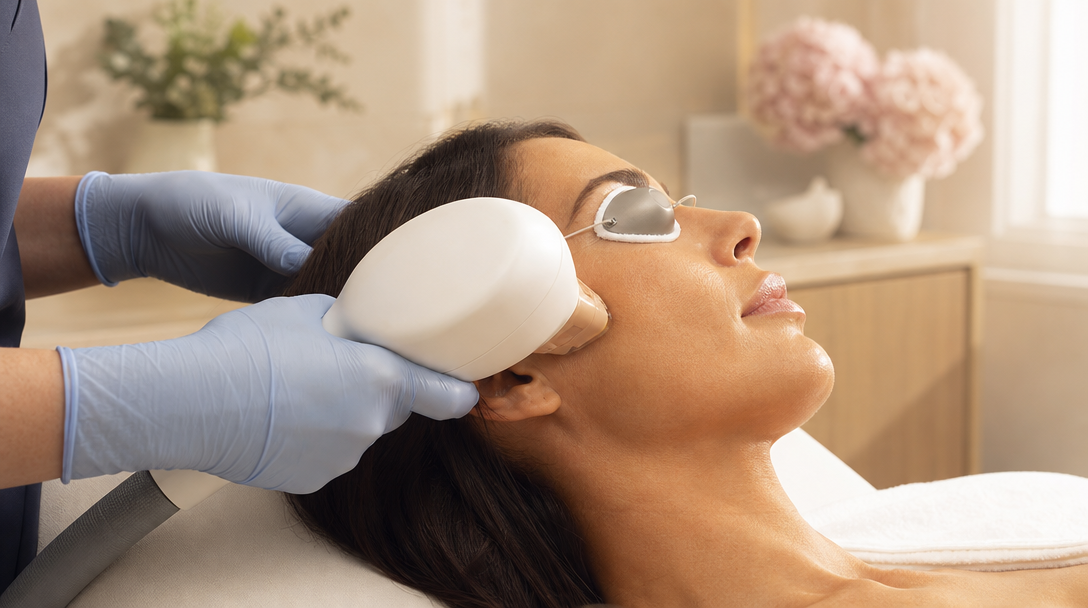
A study evaluating post-IPL skin recovery measured this early erythema (the clinical word for redness) and found it settles steadily over the following days as the skin barrier recovers. In the meantime you can usually return to work and normal activity straight away. Cool compresses help calm any heat, and a gentle mineral SPF over the area is sensible if you are heading outside. Avoid heat-based activities like hot showers, saunas and intense exercise for the first day, since heat prolongs the flushing.
What should you expect on days 1 to 3?
On days one to three your skin often feels a little tight and dry, and any pigmented spots that IPL has targeted will typically darken into small “coffee-ground” specks before they shed. This darkening looks alarming the first time, but it is expected: IPL works by fragmenting excess melanin so the body can clear it, and research on IPL for pigmented lesions describes exactly this darken-then-lift response.
The rules for this window are simple. Keep the skin hydrated with a plain, fragrance-free moisturiser, wash with cool water, and leave the darkened spots completely alone. Do not exfoliate, do not use retinoids or acids, and do not pick or scrub, because lifting the specks early can disturb healing and risk a mark. Sun protection matters more now than at any other point in the timeline.
What changes between days 4 and 7?
Between days four and seven the darkened spots begin to flake and slough away naturally, revealing fresher, more even-toned skin underneath. This is the stage where the treatment visibly starts paying off, and most of the flaking is fine and easy to disguise with a gentle moisturiser.
Keep up daily sun protection and hydration, and only reintroduce active skincare (such as vitamin C, exfoliating acids or retinoids) once the skin looks calm and the flaking has finished. If you treat several areas at different rates, that is normal: cheeks and forehead often clear before areas with denser pigment.
When will you see the final results from IPL?
Visible improvement usually appears around day seven to ten, and the full result continues to refine over about four weeks as skin turnover completes and tone evens out. A single session gives a clear step forward, but IPL is designed as a short course. In a classic study of serial treatments, improvements in pigmentation, redness and texture built up progressively across a run of full-face sessions rather than peaking after one.
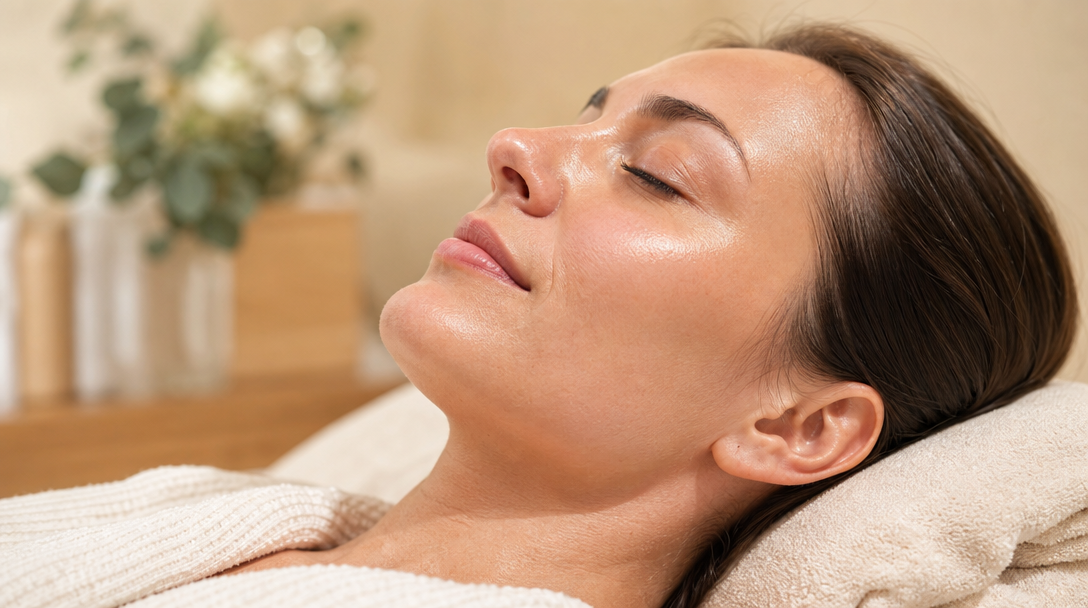
How long results last varies. Because IPL does not stop new sun exposure or ageing, the benefit is best kept up with occasional maintenance rather than treated as a one-and-done fix. A real-world analysis of regular sessions over the longer term found that ongoing, spaced IPL helped sustain the improvement in skin tone and texture. Many clinics, CoLaz included, suggest a maintenance session once or twice a year for people who want to hold their result.
What are the possible side effects of IPL?
The common side effects of IPL are mild and short-lived: redness, a little swelling, temporary darkening of pigment, and light flaking as the skin renews. These are part of the normal healing response and settle on their own within the recovery window described above.
Less common reactions include blistering, small crusts, or a temporary change in pigment (either lighter or darker patches), and these become more likely when heat settings are too high, when strong actives are used too soon, or when the skin is tanned or exposed to UV during recovery. IPL is also generally less suitable for deeper skin tones: a case report of darker skin documented second-degree burns after IPL in a Fitzpatrick type IV patient treated at a non-medical setting, which is exactly why a proper assessment and a patch test matter. Where skin type makes IPL a poor fit, a clinician should offer a safer alternative rather than push ahead. Any blistering, spreading redness or signs of infection should always be reported to your clinic promptly.
Aftercare that supports a smooth IPL recovery
Good aftercare is what separates a clean recovery from a bumpy one. Four habits do most of the work:
- Protect from the sun. Your skin is more light-sensitive after IPL, so daily broad-spectrum sunscreen is non-negotiable. The NHS advises using an SPF of at least 30, applying it generously and reapplying every two hours when outdoors. Add a wide-brimmed hat and shade during peak UV, and avoid sunbeds entirely.
- Keep skincare gentle. Stick to a mild cleanser and a fragrance-free moisturiser until the skin has fully settled. Pause exfoliating acids, retinoids and scrubs.
- Do not pick or exfoliate the flaking. Let the darkened specks shed on their own. Pulling them early is the most common cause of a lingering mark.
- Support healing with cool, not hot. Cool compresses calm redness and swelling; skip saunas, steam rooms and hot yoga for the first day or two.
Sun protection is also the single biggest factor in keeping your result. UV is the main driver of the pigmentation and redness IPL treats in the first place, and Cancer Research UK is clear that everyday UV exposure adds up over time. Protecting the treated skin protects your investment in it.
Treatments CoLaz may pair with IPL
As your skin heals, a considered plan can extend and support your IPL result. Depending on your concern, a clinician might suggest LED light therapy to calm inflammation with no downtime, or, once fully recovered, treatments such as microneedling, skin boosters or peels to build on texture and tone. IPL also sits well alongside a wider plan for pigmentation, where several gentle steps over time tend to beat one aggressive treatment. Research on combining IPL with a non-ablative laser in Fitzpatrick II to IV skin found the sequenced approach improved overall rejuvenation, which is the same logic behind layering treatments sensibly rather than stacking them all at once.
How CoLaz guides your IPL recovery
Every IPL patient at CoLaz starts with a proper assessment, a patch test where needed, and written aftercare, so you know what each stage should look like before you book. That matters because IPL is one of the treatments where suitability, settings and honest expectation-setting decide the outcome as much as the device does.
The UK aesthetics sector is guided by bodies such as the JCCP register, and reputable patient resources like the British Association of Dermatologists reinforce the same message: a trained practitioner, a skin assessment and clear aftercare are the foundations of a safe result. We would rather talk you through realistic timings and plan a short, spaced course than promise an overnight transformation.
If you want to know whether IPL suits your skin and what your recovery would look like, the free consultation is the place to start. Book at your nearest CoLaz clinic and we will map out the plan together.
Ready to begin
Book a free IPL Skin Rejuvenation consultation at your nearest CoLaz clinic.
Thirty minutes with a qualified clinician. Skin assessment, candid recommendation, no obligation. Read about IPL Skin Rejuvenation at CoLaz, from £120 (face, single session).
WhatsApp replies in minutes during opening hours
About the author
Alayika Parvez
Owner, CoLaz Aesthetics Clinic
Alaiyka Parvez bought the CoLaz franchise network in 2023, having joined the company as a Slough clinic employee in 2013 and gone on to open the Hounslow and Wembley franchises. She writes here on the treatments CoLaz delivers across its seven UK clinics.
Read more about Alaiyka and CoLaz →More on Skin
Keep reading.
15 September 2026 · 8 min
Salmon DNA polynucleotides: what they are and why aesthetics is hooked
Purified fragments of salmon DNA, known as polynucleotides or PDRN, are one of the fastest-growing skin boosters in UK clinics. Here is what the research says about how they work and what to realistically expect.
11 August 2026 · 10 min
HIFU treatment results: month by month, what is realistic
HIFU tightens skin gradually rather than instantly. Here is the honest month-by-month results timeline, how long the effect lasts, and who is a good candidate.
28 July 2026 · 10 min
Types of chemical peels: glycolic, salicylic, TCA and Jessner explained
Glycolic for dull and sun-damaged skin, salicylic for oily and acne-prone, lactic for sensitive, mandelic for pigmentation in deeper skin tones, TCA for resurfacing with downtime. A clear decision guide to the main types of chemical peels.
Begin
Book a free consultation
at your nearest CoLaz clinic.
Thirty minutes with a qualified clinician. Skin assessment, candid recommendation, written plan. No obligation.