
Hair removal · 4 May 2025 · 7 min read
Veet Hair Removal Cream: How It Works, Safe Use and Its Limits
By Alaiyka Parvez
Owner, CoLaz Aesthetics Clinic
The short version
- • Veet is a chemical depilatory: it breaks down the protein in hair so it wipes away at the skin surface, without touching the root.
- • Because the follicle is untouched, regrowth usually shows within a few days, similar to shaving.
- • The main risks are irritant contact dermatitis and, if the cream is left on too long, chemical burns, so a 24-hour patch test and strict timing matter.
- • Sensitive areas such as the face and bikini line carry a higher irritation risk and need a formula made for that area.
- • For long-term reduction rather than a few smooth days, laser hair removal or electrolysis with a qualified clinician is the more lasting route.
Veet hair removal cream is a chemical depilatory: it dissolves the protein structure of hair at the skin surface so you can wipe it away, leaving skin smooth for a few days without shaving or waxing. It is quick, painless and easy to do at home, which is exactly why so many people reach for it. The catch is that it works only at the surface, so the smoothness is short-lived, and used carelessly it can irritate or even burn the skin.
Below is an honest guide to how the cream works, how to use it safely, where it falls short, and when a longer-term option is the better choice.
What is Veet hair removal cream and how does it work?
Veet is a chemical depilatory that breaks down the keratin in hair so it separates from the skin and wipes away, rather than being pulled from the root.
The active ingredients are usually salts of thioglycolic acid, such as potassium or calcium thioglycolate, combined with an alkaline base. The base makes the hair swell and open up, and the thioglycolate then breaks the disulphide bonds that hold keratin together. Once those bonds are broken, the hair becomes soft and gelatinous and can be scraped off with the spatula. Because the disulphide bonds that the cream targets also exist in the outer layer of your skin, the same chemistry that weakens hair can irritate skin if it stays on too long.
Veet sells several formulations so you can match the product to the area and your skin type:
- A sensitive-skin formula with milder ingredients.
- A dry-skin formula with aloe vera and vitamin E.
- In-shower formulas for faster routines.
- Precision formulas for smaller areas such as the face and bikini line.
How do you use Veet hair removal cream safely?
You use it safely by choosing the right formula, patch testing first, and never leaving the cream on longer than the label says.

Here is a sensible order of steps:
- Choose the right product. Pick a formula made for your skin type and the area you want to treat, whether that is legs, underarms or bikini line.
- Do a patch test 24 hours ahead. Apply a small amount to a discreet spot and wait a full day to check for redness or itching. This single step is the best way to catch a reaction before you treat a large area.
- Prepare clean, dry skin. Never use the cream on broken, irritated or sunburnt skin, and avoid it over moles, cuts or rashes.
- Apply an even layer. Use the spatula to spread a thick, even coat. Do not rub it in.
- Time it, then test a patch. Wait the stated time, usually about 3 to 15 minutes depending on the product and hair. Scrape a small area first; if the hair lifts away easily, remove the rest.
- Rinse and moisturise. Rinse thoroughly with lukewarm water, pat dry, and apply a fragrance-free moisturiser to calm the skin.
Three habits keep reactions to a minimum:
- Never exceed the recommended time on the label. Leaving the cream on longer does not remove more hair; it just raises the risk of a burn.
- Avoid sun, perfume and tight clothing straight after treatment.
- Soothe the skin afterwards with aloe vera gel or a plain, fragrance-free moisturiser.
What are the drawbacks of Veet hair removal cream?
The main drawbacks are that results are short-lived, the cream can irritate or burn skin, and it struggles with coarse hair.
Regrowth is fast. Because the follicle is left completely intact, the hair simply grows back. Most people see stubble again within a few days, much like shaving. Depilatory creams are a surface treatment, not a way to reduce how much hair grows over time.
Irritation and burns are real risks. Irritant contact dermatitis is the most common side effect, driven by the high alkalinity of the cream, and it shows up as redness, stinging or itching. More seriously, leaving the product on too long, or using it soon after waxing, can cause chemical burns. One case report in Pediatric Dermatology described a severe reaction after a patient waxed and then used a depilatory cream in close succession. Animal-model work also shows that longer contact time raises the amount of skin damage, which is why timing matters so much.
Coarse hair resists it. Very thick or coarse hair often does not dissolve cleanly, so results can be patchy. If you have wiry facial or body hair, the cream may disappoint.
Is Veet hair removal cream safe on the face and bikini line?
It can be, but only with a formula made for that area, because facial and bikini skin is thinner and reacts more easily.
Precision or facial formulas are milder and designed for delicate skin, but the rules become stricter, not looser. Keep the cream well away from mucous membranes, the eyes and any broken skin, and never let it drift onto the genital area. If you get repeated redness or your facial hair keeps returning quickly, it is worth reading why chin hair so often comes back, because hormone-driven growth rarely responds well to any surface method. Excess or dark facial hair that appears suddenly is also worth raising with a GP, as the NHS notes it can point to a hormonal cause that is worth checking.
Veet versus shaving, waxing and laser: which lasts longest?
Of the common options, laser hair removal offers the longest-lasting result, while creams, shaving and waxing are all temporary.
Here is a simple comparison:
- Creams (Veet): dissolve hair at the surface. Painless, but regrowth in a few days. Irritation risk if mistimed.
- Shaving: cuts hair at the surface. Fast and cheap, but stubble returns within a day or two.
- Waxing: pulls hair from the root. Smoother for two to four weeks, but painful and can cause ingrown hairs.
- Laser: damages the follicle over a course of sessions for long-term reduction. Not instant, but the result lasts far longer.

The key difference is where each method acts. Creams, shaving and waxing all deal with hair you already have. Laser works on the follicle itself, which is why the AAD explains that a course produces lasting reduction rather than a permanent, one-off fix.
When does longer-term hair removal make more sense?
Longer-term hair removal makes sense when you are tired of the few-day cycle, when creams irritate your skin, or when the hair is driven by hormones.
If you are treating the same area every few days, a course of laser hair removal can be a calmer routine over time. Laser targets the pigment in the follicle, and NHS clinics such as the Bristol Laser Centre describe most patients needing several sessions spaced weeks apart for a good result. It suits many skin tones, though patient information from Leeds NHS is clear that laser does not work on white, grey or very fine blonde hair.
Hormonal growth is its own category. Upper-lip and chin hair, including growth linked to PCOS, keeps cycling back regardless of how often you use a cream. The NHS lists laser hair removal among the options for this alongside medical management. Where laser cannot help, for example on pale or downy hair, electrolysis treats each follicle individually and can clear hair of any colour.
How does CoLaz approach hair removal?
At CoLaz, every new hair removal patient starts with a free consultation and, for laser, a patch test before any full session.
We do this because skin and hair vary so much from person to person, and because the safe choice of laser depends on your skin tone and hair type. The consultation is where we work out whether laser, electrolysis or simply a better at-home routine is right for you, and we confirm any course of treatment in writing rather than selling a fixed package up front.
Safety and standards matter here. The UK aesthetics sector is guided by the JCCP register and the Save Face accreditation scheme, both recognised by the Professional Standards Authority, and our clinicians are trained and qualified for the lasers they operate. A supermarket cream has its place for a quick, painless tidy-up, but if you want a result that lasts, a free consultation at your nearest CoLaz clinic is the better first step.
Ready to begin
Book a free Laser Hair Removal consultation at your nearest CoLaz clinic.
Thirty minutes with a qualified clinician. Skin assessment, candid recommendation, no obligation. Read about Laser Hair Removal at CoLaz, from £30 (upper lip, single session).
WhatsApp replies in minutes during opening hours
About the author
Alaiyka Parvez
Owner, CoLaz Aesthetics Clinic
Alaiyka Parvez bought the CoLaz franchise network in 2023, having joined the company as a Slough clinic employee in 2013 and gone on to open the Hounslow and Wembley franchises. She writes here on the treatments CoLaz delivers across its seven UK clinics.
Read more about Alaiyka and CoLaz →More on Hair removal
Keep reading.
8 September 2026 · 12 min
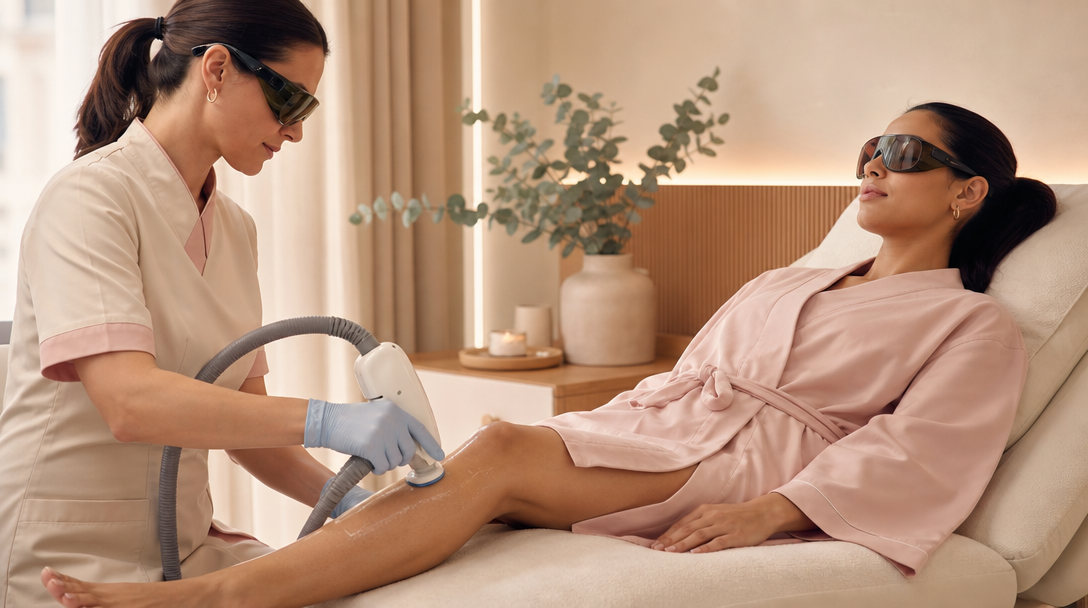
Does laser hair removal hurt? Laser hair removal pain by body area
Laser hair removal is uncomfortable, not painful, and the level depends almost entirely on the area. Here is our honest area-by-area rating, what the evidence says about cooling, and the one thing not to do before a session.

2 September 2026 · 12 min
Is laser hair removal safe on dark skin? What the evidence says
Laser hair removal on dark skin works, but only when the wavelength matches your skin type. Here is the science behind why melanin matters, which lasers suit Fitzpatrick V and VI, and the questions to ask before you book.
1 July 2026 · 7 min
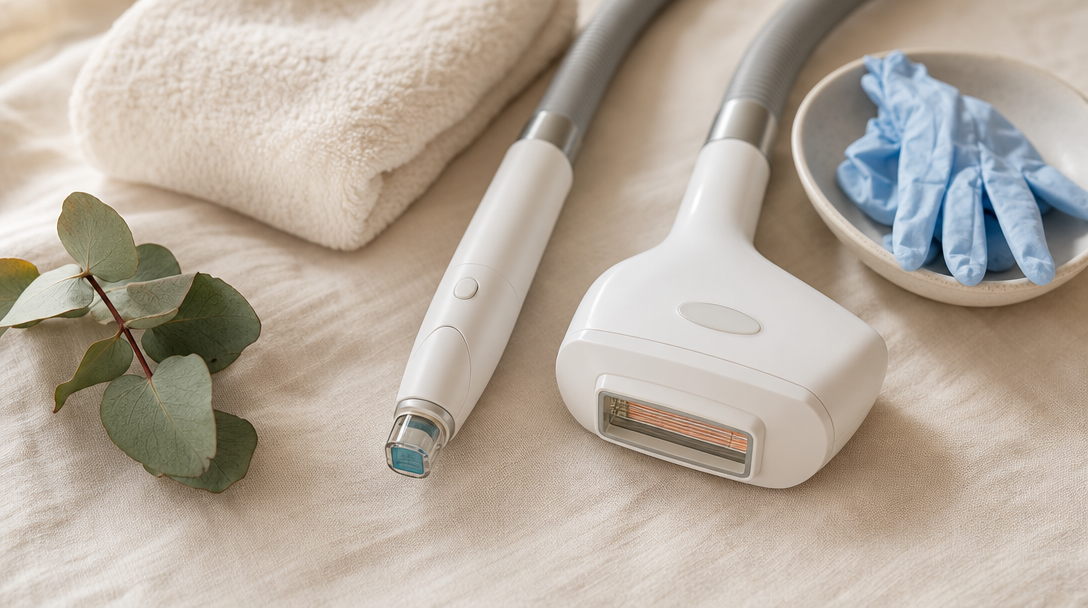
IPL vs laser hair removal: why the device you choose matters
The real difference between IPL and laser hair removal, why it changes your results and safety, and how CoLaz matches the right device to your skin and hair.
Begin
Book a free consultation
at your nearest CoLaz clinic.
Thirty minutes with a qualified clinician. Skin assessment, candid recommendation, written plan. No obligation.