
Skin · 17 June 2026 · 7 min read
What causes skin tags, and how are they removed?
By Alaiyka Parvez
Owner, CoLaz Aesthetics Clinic
The short version
- • Skin tags are small, soft, harmless growths that form where skin rubs against skin or clothing, such as the neck, underarms, eyelids and groin.
- • They are more common with age, in pregnancy, with extra weight and with type 2 diabetes, and there is often a family tendency.
- • A skin tag is not dangerous, but anything that changes, bleeds or you are unsure about should be checked by a professional first.
- • Home removal kits, creams and tying a tag off carry real risks of bleeding, infection and scarring, and can damage something that was never a simple skin tag.
- • In clinic, removal is quick, with cryotherapy, cautery or a fine surgical snip, and CoLaz offers a free photo assessment before you book.
Skin tags are caused by skin rubbing against skin or clothing over time, which is why they tend to appear in folds and creases such as the neck, underarms, eyelids and groin. They are completely harmless, but they catch on jewellery and collars, and most people simply do not like the look of them. This guide covers what causes skin tags, whether they are ever a warning sign, why the home kits are a bad idea, and how a clinic removes them safely in minutes. If you already know you want one gone, you can jump straight to skin tag removal at CoLaz.
What exactly is a skin tag?
A skin tag, known medically as an acrochordon, is a small, soft, skin-coloured or slightly darker growth that hangs off the skin on a thin stalk. They are very common and almost always completely harmless, which is why the NHS classes their removal as cosmetic rather than medical.
Skin tags are made of loose collagen fibres and blood vessels wrapped in skin. They range from a pinhead to about the size of a grape, and they tend to form in the places where skin moves against itself: the neck, armpits, eyelids, under the breasts and around the groin. DermNet notes that they are most common in middle age and beyond, and that many people who get one tend to get several.
What causes skin tags?
The single biggest factor is friction. Skin tags form where skin rubs against skin or against clothing, which is why they cluster in folds and high-movement areas. On top of that, several things make you more likely to develop them.
- Age. They become more common from middle age onwards, as skin loses some of its firmness.
- Weight. Carrying extra weight creates more skin folds and more friction, and the American Academy of Dermatology lists being overweight as a key risk factor.
- Pregnancy and hormones. Hormonal shifts, particularly during pregnancy, can trigger new skin tags, which is thought to be linked to changes in growth-promoting hormones.
- Type 2 diabetes and insulin resistance. Skin tags are more common in people with type 2 diabetes, and clinicians often note them as a possible marker of insulin resistance.
- Family tendency. If your parents had skin tags, you are more likely to get them too.
In other words, skin tags are not caused by anything you have done wrong, and they are not contagious. They are a normal response of the skin to friction, age and your own biology.

Are skin tags dangerous, or a warning sign?
A genuine skin tag is benign and is not dangerous in itself. It will not turn into skin cancer, and it does not need to be removed for health reasons. The catch is making sure that what you are looking at is actually a skin tag.
Other growths, including moles, warts, seborrhoeic keratoses and, rarely, skin cancers, can look similar to the untrained eye. The advice across dermatology sources is consistent: see a professional if a growth changes in size, shape or colour, starts to bleed, itch or hurt, or if you are simply not sure what it is. That is also why we never recommend self-diagnosing from a photo on the internet.
Because skin tags can be associated with weight and with type 2 diabetes, a sudden crop of new ones is worth mentioning to your GP, not because the tags are harmful, but because they can occasionally prompt a useful conversation about your wider health.
Can you remove a skin tag yourself at home?
We strongly recommend against removing a skin tag yourself. The home kits, freezing pens, removal creams and the old trick of tying a tag off with thread or dental floss all carry real risks, and the potential downsides far outweigh saving a clinic visit.
Healthline and other medical sources are clear that home removal can cause bleeding, infection and scarring, and that over-the-counter creams can burn the healthy skin around the tag. Cutting or tying off a tag yourself can also lead to a wound that heals badly. The most important risk is the one people forget: if the growth was not actually a simple skin tag, removing it at home destroys the very tissue a clinician would have wanted to look at. Harvard Health makes the same point, that removal is best done by a professional who can confirm what it is first.
How are skin tags removed safely in a clinic?
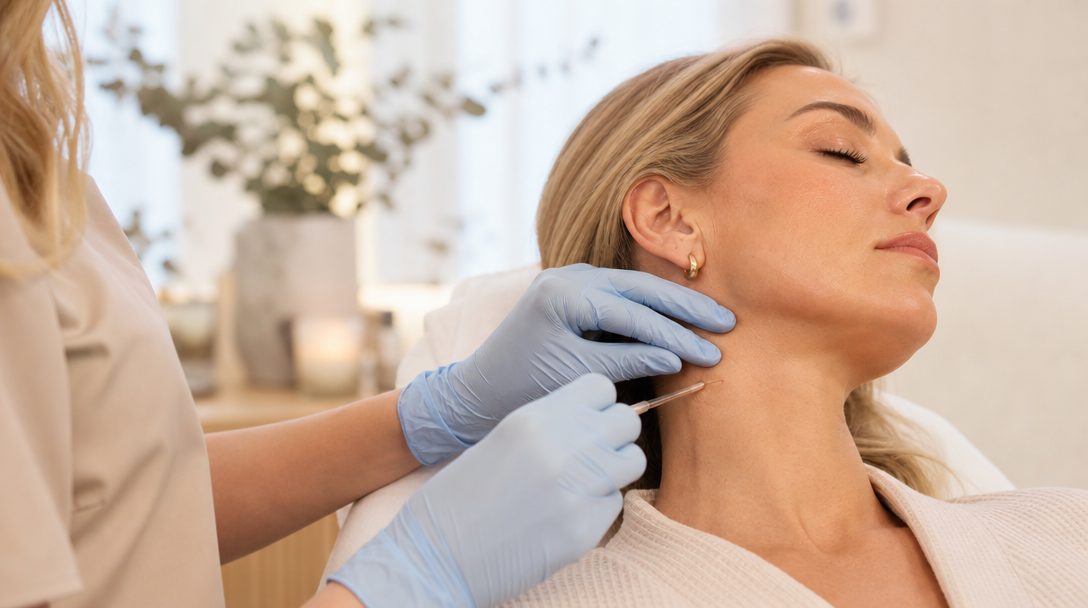
In a clinic, skin tag removal is quick, controlled and usually done in a single short appointment. After a clinician confirms the growth is a skin tag, they choose the right method for its size and location.
- Cryotherapy. The tag is frozen so it dries up and drops off over the following days.
- Cautery or diathermy. A fine heated tip removes the tag and seals the area at the same time, which limits bleeding.
- Surgical snip. A small sterile blade or scissors removes the tag at the base, often after numbing, ideal for larger tags.
Most removals take minutes and need little or no downtime, and a professional approach keeps scarring to a minimum and the area clean. Top Doctors notes that the method is matched to the size and site of the tag, which is exactly why a quick assessment matters before anything is removed.
When should you see a clinician first?
See a clinician before removing anything if the growth is on or very near the eyelid, if it has changed in size, shape or colour, if it bleeds, itches or feels sore, or if you are not completely sure it is a skin tag rather than a mole or another lesion. If it might be a mole, our mole removal assessment is the safer route, because moles need a proper check before any decision.
At CoLaz, you do not have to guess. You can send a photo for a free assessment, and a clinician will confirm whether it is a skin tag and the best way to remove it before you book. Skin tag removal is offered across our UK clinics, and every appointment starts with that quick check so the treatment is both safe and right for you. When you are ready, book skin tag removal or send a photo for your free assessment.
Ready to begin
Book a free Skin Tag Removal consultation at your nearest CoLaz clinic.
Thirty minutes with a qualified clinician. Skin assessment, candid recommendation, no obligation. Read about Skin Tag Removal at CoLaz, .
WhatsApp replies in minutes during opening hours
About the author
Alaiyka Parvez
Owner, CoLaz Aesthetics Clinic
Alaiyka Parvez bought the CoLaz franchise network in 2023, having joined the company as a Slough clinic employee in 2013 and gone on to open the Hounslow and Wembley franchises. She writes here on the treatments CoLaz delivers across its seven UK clinics.
Read more about Alaiyka and CoLaz →More on Skin
Keep reading.

15 September 2026 · 8 min
Salmon DNA polynucleotides: what they are and why aesthetics is hooked
Purified fragments of salmon DNA, known as polynucleotides or PDRN, are one of the fastest-growing skin boosters in UK clinics. Here is what the research says about how they work and what to realistically expect.

11 August 2026 · 10 min
HIFU treatment results: month by month, what is realistic
HIFU tightens skin gradually rather than instantly. Here is the honest month-by-month results timeline, how long the effect lasts, and who is a good candidate.

28 July 2026 · 10 min
Types of chemical peels: glycolic, salicylic, TCA and Jessner explained
Glycolic for dull and sun-damaged skin, salicylic for oily and acne-prone, lactic for sensitive, mandelic for pigmentation in deeper skin tones, TCA for resurfacing with downtime. A clear decision guide to the main types of chemical peels.
Begin
Book a free consultation
at your nearest CoLaz clinic.
Thirty minutes with a qualified clinician. Skin assessment, candid recommendation, written plan. No obligation.